Behind the website · the namesake
How we built Helen’s namesake gallery.
The gallery places Helen Morse on the west side, Charles Hosmer Morse on the east, and Helen the rescued cat on her own center pedestal. Historic portraits hang behind them.
More build notes: How we built Helen’s website · The Three.js sitting room · The four live cams · Secure checkout
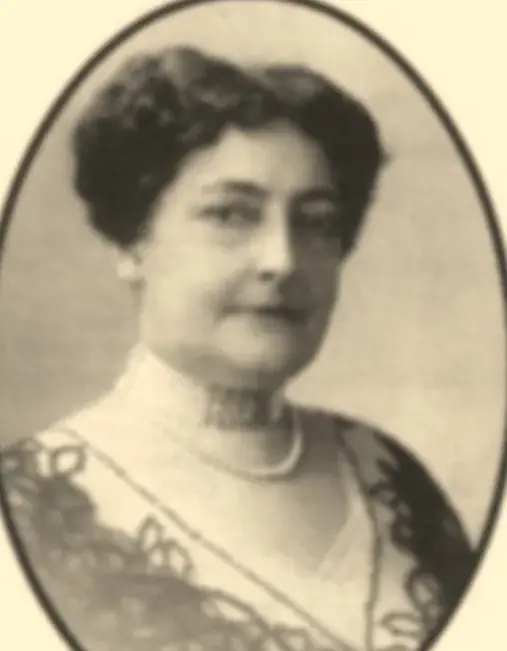
The people and cat behind the name
In 1915, Helen Morse gathered sixteen women and founded the Woman’s Club of Winter Park. The club’s permanent home opened in 1921, and its auditorium was dedicated as Helen Morse Hall. She lived at Osceola Lodge with her husband, Charles Hosmer Morse, a Winter Park industrialist whose family name also appears on the Morse Museum of American Art. Helen the Cat Live does not operate or represent any of those institutions; this is an independent tribute.
In 2026, a young tortoiseshell calico mother was found at the same club with two kittens. Club members gained their trust with regular food and quiet attention, gathered both kittens, and named the mother Helen. The cat is a real Winter Park rescue, not a mascot created for a 3D live cat cam. The four 24/7 live cat cams on the home page show the household she joined.
The live feeds stay on the home page so this gallery can focus on the namesake story. The Royal Collection is the site’s separate shop and does not appear on Helen Morse’s pedestal. Even cats understand that some rooms have a purpose.
We built the pedestals first
Each Morse bust sits on a marble cylinder with a thin cap, a gold ring, and a name plaque. Helen Morse appears on the west side with “Founding president, Woman’s Club of Winter Park.” Charles Hosmer Morse appears on the east with “Osceola Lodge · the museum’s namesake.” A small spotlight brightens each face when a visitor points to it.
Helen the cat has a separate, lower and wider marble pedestal in the center, slightly in front of the two busts. We reused the seated 3D model from the home page at the right height. She is not presented as a third Morse; she is the rescued cat whose name connects the two stories.
Selecting a bust shows the person’s name and short description, and lights that group. Selecting the cat’s 3D likeness explains that it is a model and directs visitors to the cameras for the real Helen. The model is decorative. The living cat remains gloriously unclickable.
Turning full-body models into busts
The Morse figures arrived as standing 3D models in GLB files. GLB is a common format that stores a complete 3D scene or object. Instead of showing each full figure on a small pedestal, we kept the head and shoulders, resized that section, and positioned it on the marble cap.
We made the cut with a clipping plane, an invisible boundary that tells the renderer to show everything above the pedestal and hide everything below it. Shadows use the same boundary, so hidden legs do not cast odd shapes on the floor. While a GLB loads, a simpler painted bust based on the historic portrait fills the space. If the model fails, that stand-in remains instead of leaving an empty pedestal.
The exported models initially faced sideways, so we rotated them toward the visitor. We also hung matching gold-framed portraits of Helen Morse and Charles Hosmer Morse on the back wall. Their size and placement echo the home page so both rooms feel like parts of the same site.
Keeping each room focused
The home page uses portraits of Helen the cat because that room is hers. The gallery uses portraits of the Morses because it explains her name. Visitors looking for the fountain, food bowl, treat dispenser, or scratching post can find those 24/7 live cat cams on the home page and in the camera build notes.
The gallery reuses the same Three.js room, marble floor, gold details, and limited camera movement as the home page. We removed the ottoman so Helen’s center pedestal could take its place, and aimed the camera at the figures instead of a television. The 3D room notes explain the camera limits.
An independent tribute
Helen Morse, the Woman’s Club of Winter Park, Helen Morse Hall, Osceola Lodge, and the Morse Museum are real. This website does not operate their organizations, shops, or cameras. Please use their own websites if you want to support them. Our Royal Collection uses Printify to make items from photos of Helen the cat, with payment handled on this website as described in the checkout notes. Treat Cam costs $2; other current prices belong in the shop.
The busts are artistic 3D likenesses made for this independent tribute page, not museum exhibits. The build FAQ and questions page have shorter answers. To see the real Helen move, use the live cameras rather than asking the marble pedestal for an encore.
Visit the gallery or watch Helen live
Read Helen’s story in the finished gallery, or watch the four live cat cams. The busts will wait. They are unusually patient.